I confess..
to my life partner, my mentor..


Moritz,
Thank you for being my mentor.
You always tell me that I am smart and wise, but the truth is, you are the wise one in my world.
Even though we often see things differently, and there are times when I feel you’re a little too skeptical or too opinionated about certain things, you never fail to impress me with your humility. You never need to prove that you’re right. Instead, you listen, you think, and you respond with quiet confidence. That is a rare quality.
Being in a sales industry, I’m often operating under tremendous pressure. It’s easy to become overwhelmed, emotionally affected, or caught up in the urgency of everything. Somehow, you always know how to guide me back to clarity. You have this incredible ability to help me see the light at the end of the tunnel when all I can see is the problem in front of me.
What I admire most is that you never look at my situations with bias or emotion. You don’t simply tell me what I want to hear. Instead, you speak with both firmness and gentleness at the same time—a balance I still don’t know how you manage so effortlessly. Your words reassure me, challenge me, and gently nudge me toward doing what is right, not what is easy.
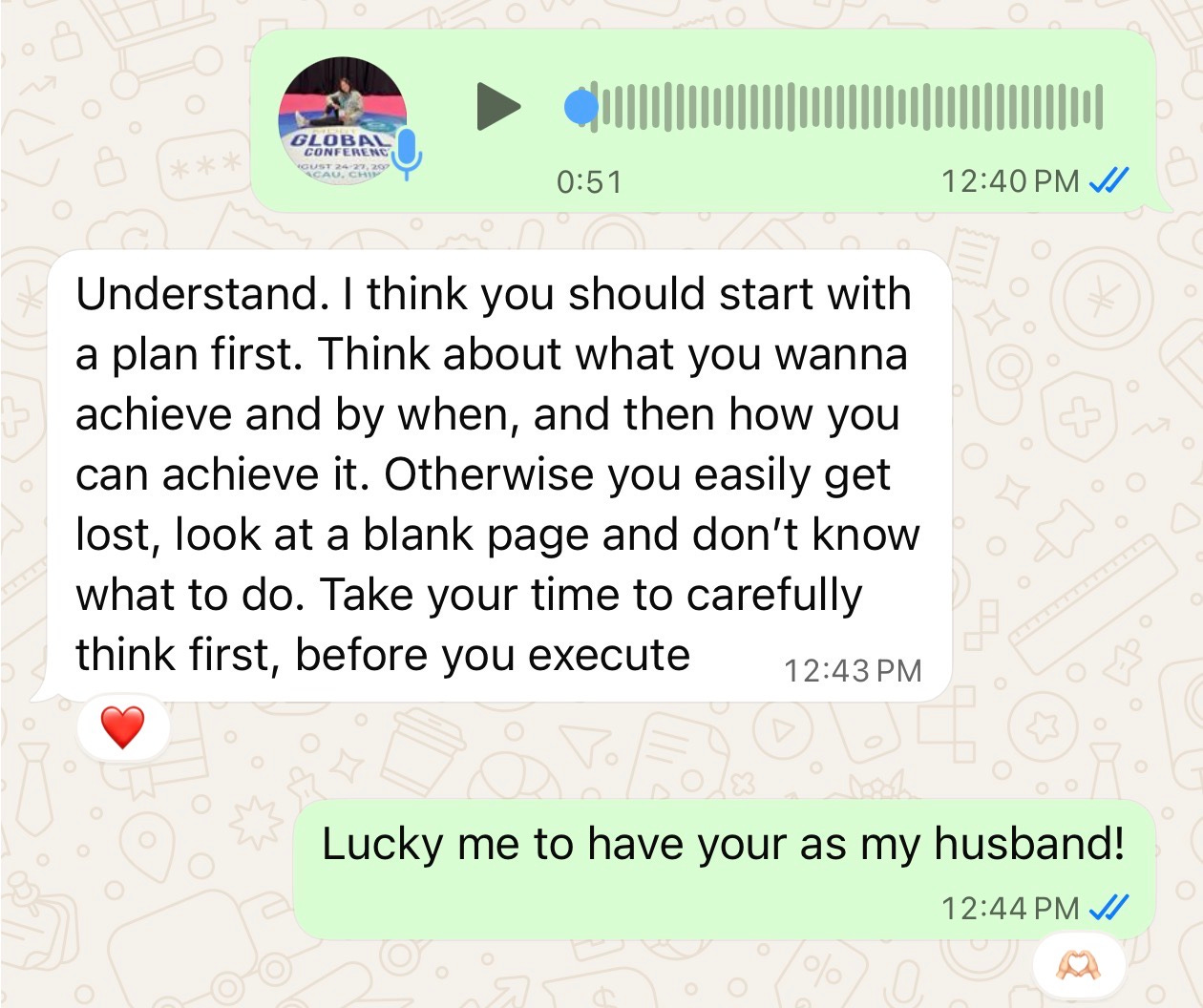
Whenever I feel lost, you seem to naturally take a bird’s-eye view. While I’m trapped in the details, you’re able to step back and see the bigger picture. You help me understand the situation from the highest lens, asking questions that make me think rather than handing me the answers. You don’t solve my problems for me—you teach me how to navigate them myself.
That, to me, is the mark of a true mentor.
You don’t create dependence; you build confidence. You don’t lead by controlling; you lead by empowering. Every conversation with you leaves me thinking more deeply, seeing more clearly, and becoming a little wiser than before.
真的非常难得。
Thank you for believing in me, especially during moments when I struggle to believe in myself. Thank you for reminding me that growth isn’t about finding all the answers, but about learning how to ask better questions, staying true to my values, and trusting the process.
I don’t say this often enough, but you’ve shaped the way I think, the way I make decisions, and ultimately, the person I’m becoming.
I’m incredibly grateful to have you by my side—not just as my husband, but as my mentor, my sounding board, and one of the greatest teachers in my life.
Writing this with love, a little bit of happy tear hehe, Siew…
To my friends, my peers, my readers, and even to those who may only cross paths with me briefly, I consider myself incredibly fortunate.
Not because my relationship is perfect—it isn’t. Not because we never disagree—we do. But because I found a soulmate who continues to help raise me into a better version of myself. When I take many steps back and reflect on our relationship, if there is only one thing I believe we have consistently done right, it is this: we communicate.
I’ve come to realise that assumptions are one of the biggest silent killers of relationships. Most conflicts don’t begin with what actually happened; they begin with the stories we create in our own minds.
Something as small as this: if Moritz walks into the kitchen, pours himself a glass of water, and doesn’t bring one for me, I could easily tell myself all kinds of stories.
“He only thinks about himself.”
“He doesn’t care about me.”
“Why didn’t he even think of me?”
But instead of allowing those stories to become my reality, I ask.
“Hey, I noticed you only got water for yourself. What happened?”
Often, the answer is so ordinary that it immediately dissolves every assumption.
Maybe he thought I already had a drink.
Maybe he was distracted.
Maybe he genuinely didn’t notice.
And sometimes, he’ll simply say, “You’re right. I should have gotten one for you.”
Either way, we arrive at understanding instead of resentment. I’ve learnt that clarity is almost always kinder than assumption. Communication isn’t just about expressing ourselves. It’s about giving the other person the opportunity to explain before we write a narrative on their behalf.
The more I practise this, the more I realise that the healthiest relationships aren’t built on people who can read each other’s minds. They’re built on people who are willing to keep asking questions, even after years together.
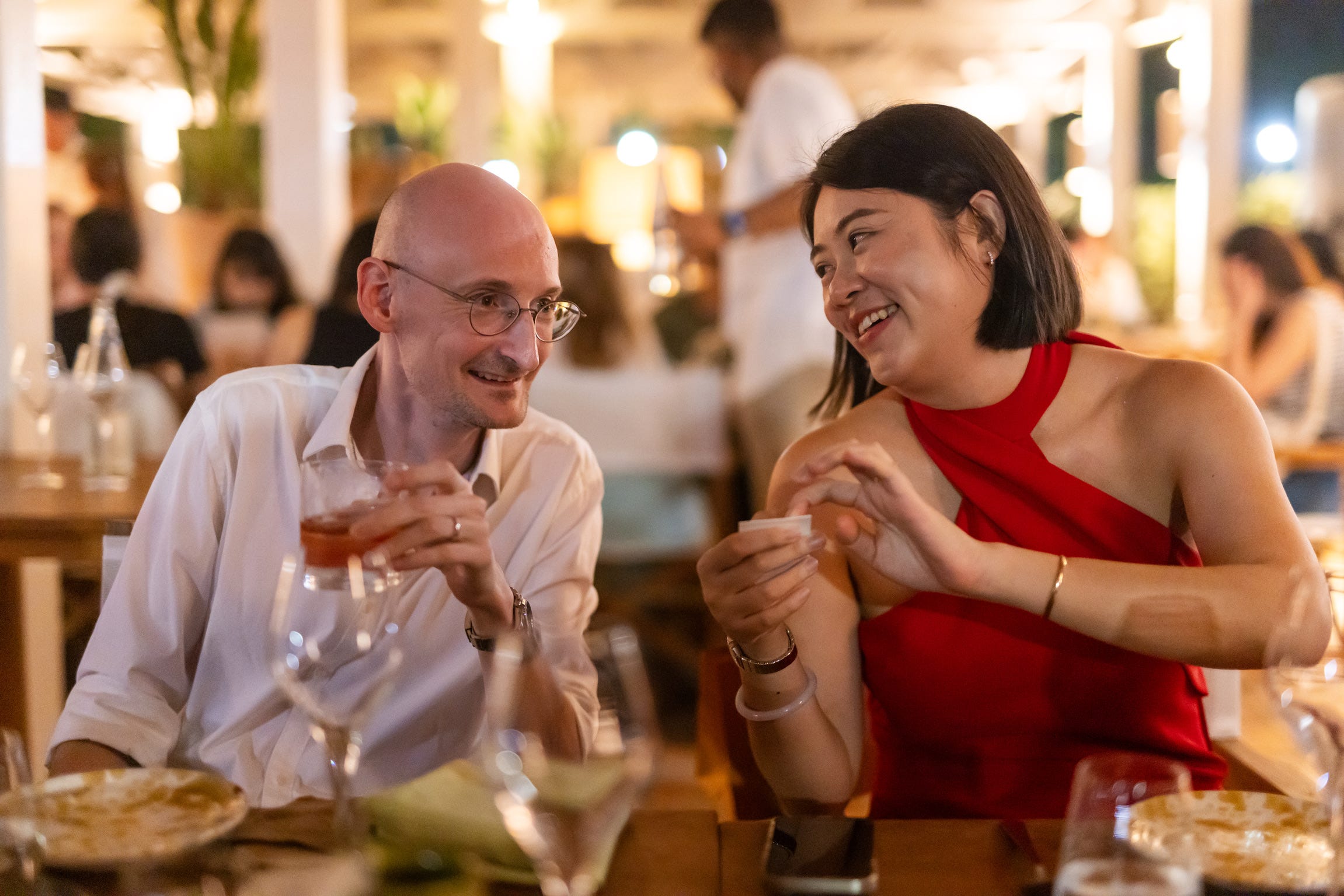
Good communication doesn’t mean we never argue. It means we argue with facts instead of fiction. It means seeking understanding before seeking to be understood.
Looking back, I think one of the greatest gifts Moritz has given me isn’t simply love—it’s teaching me how to communicate with honesty, patience, and grace. That lesson extends far beyond our marriage. It has shaped the way I interact with my family, my friends, my colleagues, my clients, and even with myself.
Because every difficult conversation handled with openness is another opportunity to deepen trust. And every assumption replaced with understanding is another step towards love.